
VANGUARD WATERPROOFING KNOWLEDGE CENTRE
ONTARIO BASEMENT WATERPROOFING KNOWLEDGE CENTRE
Get straightforward answers to common questions about basement leaks, exterior waterproofing, interior drainage systems, foundation cracks, sump pumps, window wells, costs, installation, maintenance, and Ontario water conditions.
Practical Answers
Based on real Ontario conditions
Educational Resources
Understand your options
Region-Specific Guidance
From GTA to surrounding areas
Expert Support
When you’re ready, we’re here to help
Explore FAQ Categories
Select a category below to find answers to common questions. Each section includes helpful information and links to related services.
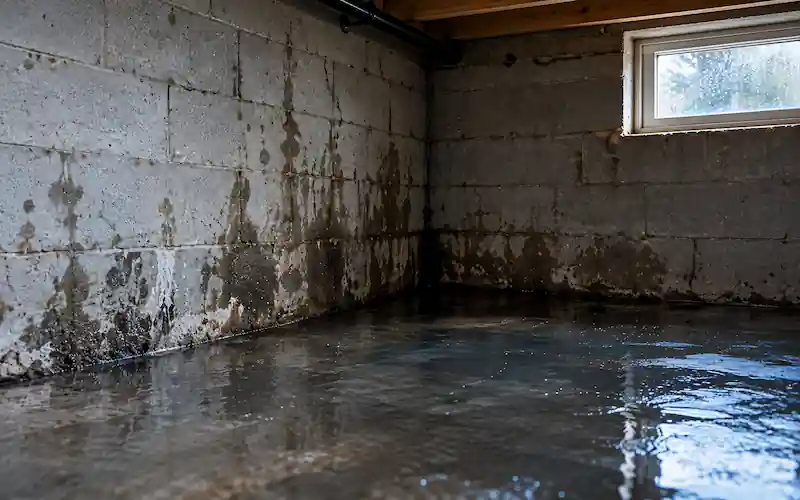
Basement Waterproofing Problems
Why is my basement leaking? What causes water in the basement? Why is my basement leaking? What causes water in the basement? Learn about the most common causes of basement water intrusion in Ontario homes.
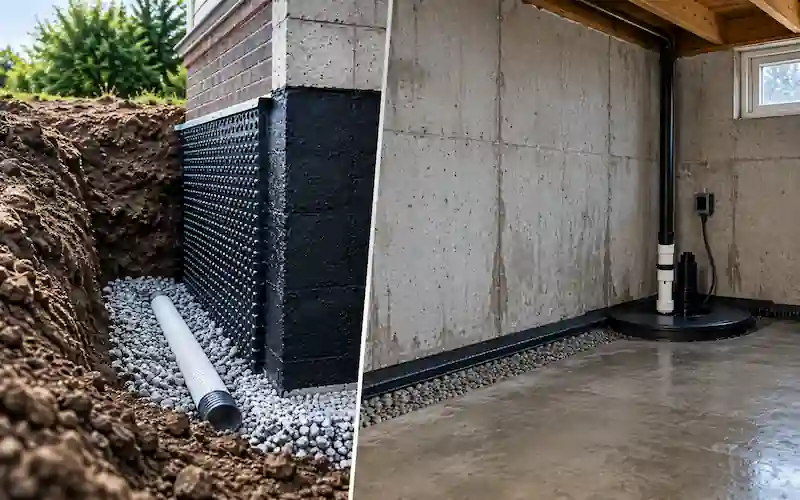
Interior vs. Exterior Waterproofing
What’s the difference? Which system do you need? Learn when interior or exterior waterproofing is the right solution for your home.
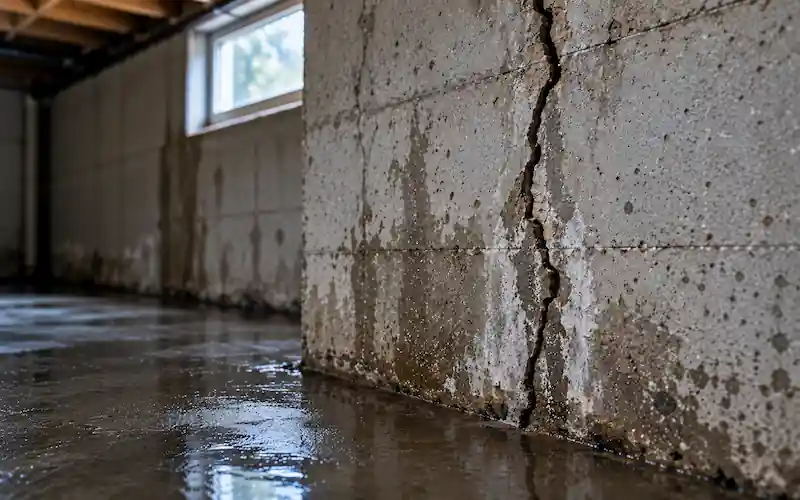
Foundation Cracks
Which cracks leak? horizontal vs. vertical? Epoxy or polyurethane? Get answers about foundation cracks and when a structural evaluation may be needed.
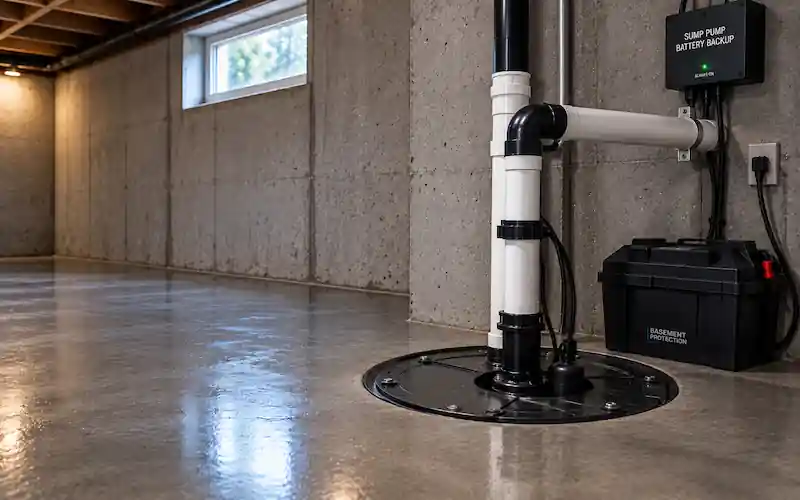
Sump Pumps & Drainage
How does a sump pump work? Do I need a battery backup? Where should water discharge go? Find answers about sump systems and drainage solutions.
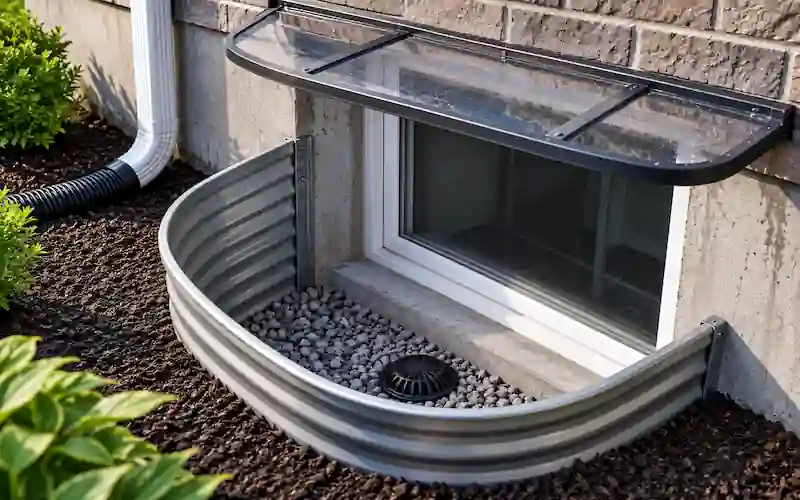
Window Wells & Drains
Why do window wells fill with water? Learn about well depth, drainage stone, drain connections, grading, covers, repairs, and replacement.
Cost, Installation & Warranty
What does basement waterproofing cost? Learn what affects pricing, installation timelines, project requirements, maintenance, and warranty coverage.
Popular Questions
Why is my basement leaking only during heavy rain?
Basement leaks that appear during heavy rain are often caused by saturated soil, poor grading, drainage problems, foundation cracks, or increased groundwater pressure around the foundation. When water accumulates faster than the property’s drainage system can manage it, it may find a pathway through cracks, joints, basement windows, or other vulnerable areas.
Do I need exterior or interior waterproofing?
It depends on where the water is coming from, the condition of the foundation, accessibility, and the property’s drainage system. Exterior waterproofing is designed to stop and manage water from outside the foundation, while interior drainage systems collect water that reaches the interior perimeter and redirect it toward a sump system for controlled discharge. A proper inspection helps determine which approach is appropriate.
How do I know if a crack is serious?
Not every foundation crack indicates a structural problem, but cracks that are horizontal, widening, displaced, repeatedly leaking, or associated with wall movement should receive closer attention. The crack’s direction, width, location, moisture conditions, and evidence of movement should be assessed before determining the appropriate repair.
How long does a sump pump last?
Many residential sump pumps operate for roughly 7–10 years, but actual service life varies considerably depending on pump quality, installation, operating frequency, groundwater conditions, maintenance, and whether the pump is properly sized. Pumps that run frequently should be inspected and tested regularly rather than replaced based on age alone.
What is the average cost of basement waterproofing in Ontario?
Basement waterproofing costs vary significantly depending on the source of the water, repair method, foundation type, accessibility, excavation requirements, drainage conditions, linear footage, sump requirements, and extent of existing damage. A localized foundation crack repair may cost far less than a complete interior drainage system or full exterior excavation, so an on-site assessment is the most reliable way to determine the appropriate scope and price.
Still Have Questions?
We’re happy to help. Get expert advice for your specific situation
No obligation. Just honest answers.
Ontario Basement Waterproofing FAQ
Answers to your most common questions
Explore our complete FAQ library below. Each section includes practical answers based on real Ontario conditions
Basement Water Problems
Basement water can enter a home through foundation cracks, wall-floor joints, basement windows, drainage problems, or other vulnerable areas. Rainfall, snowmelt, grading, groundwater conditions, and the performance of existing drainage systems can all influence when and where water appears. Identifying the source is the first step toward determining the appropriate solution.
Why is water coming into my basement?
Basement water can originate from several sources, including foundation cracks, the wall-floor joint, basement windows, plumbing leaks, surface runoff, and groundwater around the foundation. The location of the water does not always reveal its original source, so the surrounding conditions should be assessed before choosing a repair.
Why does my basement leak only during heavy rain?
Heavy rainfall can saturate the soil around a foundation and increase the amount of water that the property’s drainage system must manage. Poor grading, short downspouts, foundation cracks, window wells, blocked drainage, or other vulnerable areas may allow water to reach the basement when rainfall becomes intense or prolonged.
Why does my basement leak during spring snowmelt?
During Ontario’s spring thaw, melting snow can release a large amount of water while the surrounding ground may still be frozen or saturated. This can increase runoff toward the foundation and groundwater around the home, exposing drainage or foundation problems that may not be noticeable during drier conditions.
What is hydrostatic pressure?
Hydrostatic pressure is the pressure exerted by water against or beneath a structure. When soil around a basement becomes saturated, groundwater can place increased pressure on foundation walls, floors, cracks, joints, and drainage systems. Effective drainage helps manage water around the foundation and reduce the conditions that contribute to this pressure.
Why is water coming through the joint between my basement wall and floor?
The connection between the foundation wall and basement floor is commonly called the cove joint or wall-floor joint. Water appearing here can be associated with groundwater beneath or beside the foundation, drainage conditions, or the way the wall and floor were constructed. Simply sealing the visible joint may not address the underlying source of the water.
Why are my basement walls damp even though I don't see a leak?
Basement dampness can result from elevated humidity, condensation, moisture moving through masonry, minor water intrusion, or inadequate ventilation and drainage. Dampness should be distinguished from an active foundation leak because the appropriate solution depends on the actual moisture source.
What is the white powder on my basement walls?
The white, chalky material commonly found on concrete or masonry basement walls is often efflorescence. It develops when moisture moves through masonry, dissolves naturally occurring salts, and leaves those salts behind as the moisture evaporates. Efflorescence itself is generally a symptom of moisture movement rather than the underlying cause.
Can gutters and downspouts cause basement water problems?
They can contribute. Overflowing gutters, blocked downspouts, or discharge located too close to the foundation can concentrate roof runoff beside the house. Gutters should be maintained, and downspout water should be directed to an appropriate location away from the foundation in accordance with local requirements and site conditions.
Why does my basement smell musty?
A persistent musty smell can indicate elevated humidity, damp building materials, inadequate ventilation, or hidden moisture. Because moisture can exist behind finished walls, beneath flooring, or in other concealed areas, the absence of visible standing water does not necessarily mean the basement is dry.
Does a wet basement always mean I need waterproofing?
No. Water in a basement can also come from plumbing, appliances, condensation, above-grade openings, or other sources unrelated to foundation waterproofing. The source should be identified before recommending excavation, interior drainage, crack repair, sump work, or another waterproofing solution.
How do I determine where basement water is coming from?
Start by documenting where and when the water appears. Note whether it occurs during heavy rain, prolonged rainfall, spring snowmelt, or independently of weather. An inspection can then consider foundation cracks, wall-floor joints, windows and window wells, grading, downspouts, drainage systems, sump operation, and other potential sources to narrow down the cause.
Can poor grading cause basement leaks?
Yes. If the ground slopes toward the house, rainfall and snowmelt can be directed toward the foundation instead of away from it. Correcting grading can reduce surface water around the home, although grading alone may not resolve leaks caused by foundation defects, groundwater, or drainage-system problems.
Interior Vs. Exterior Waterproofing
Interior and exterior basement waterproofing manage water in fundamentally different ways. Exterior systems address water from outside the foundation, while interior drainage systems collect and redirect water that reaches the inside perimeter of the basement. The appropriate approach depends on the source of the water, foundation conditions, drainage, accessibility, budget, and the objectives of the repair.
What is the difference between interior and exterior basement waterproofing?
Exterior waterproofing is performed from outside the foundation and is designed to prevent or manage water before it enters through the foundation wall. This typically involves excavation, foundation preparation, waterproofing materials, drainage protection, and footing drainage where required.
Interior waterproofing generally refers to an interior drainage and water-management system. Rather than preventing all water from reaching the foundation, it collects water at the interior perimeter and redirects it toward a sump system for controlled discharge
Is exterior waterproofing better than interior waterproofing?
Not necessarily. They address water differently and should not be treated as interchangeable versions of the same system.
Exterior waterproofing may be preferable when the objective is to address water from outside the foundation and exterior access is practical. Interior drainage can be highly effective when the objective is to manage groundwater or foundation leakage from inside the basement without excavating the exterior.
The better solution is the one appropriate for the actual conditions.
How does interior basement waterproofing work?
An interior drainage system typically collects water along the inside perimeter of the foundation, commonly near the footing and wall-floor joint. The water enters a drainage channel or pipe surrounded by drainage stone and is directed toward a sump pit.
The sump pump then discharges the collected water to an appropriate location away from the foundation.
How does exterior basement waterproofing work?
Exterior waterproofing generally requires excavation beside the foundation to expose the wall. The foundation is cleaned and prepared, cracks or defects are addressed as required, and an appropriate waterproofing membrane and drainage/protection layer are installed.
Footing drainage or weeping tile may also be repaired or replaced when required. Drainage stone, filter fabric, backfilling, and final grading help complete the exterior water-management system.
How do I know whether I need interior or exterior waterproofing?
The decision depends on factors such as where water is entering, foundation construction, condition of existing drainage, exterior accessibility, basement finishes, grading, groundwater conditions, and the extent of the problem.
A proper assessment should identify the likely water source and contributing conditions before recommending either approach.
When is exterior excavation necessary?
Exterior excavation may be appropriate when the foundation wall needs to be exposed to address exterior water intrusion, deteriorated waterproofing or damp-proofing, foundation defects, or drainage conditions at the footing.
Excavation may also provide access to existing weeping tile and other exterior components that cannot be properly evaluated or repaired from inside the basement.
Can interior waterproofing stop basement flooding?
A properly designed interior drainage and sump system can significantly reduce the risk of basement flooding caused by groundwater or water reaching the interior perimeter of the foundation.
However, it cannot prevent every possible source of flooding. Plumbing failures, sewer backups, surface water entering through openings, inadequate sump capacity, power failures, and other conditions require separate consideration.
Can I waterproof my basement from the inside without excavating?
In many situations, yes. Interior drainage systems allow groundwater and foundation leakage to be managed without excavating around the exterior of the home.
However, this is technically a water-management approach rather than an exterior barrier system. Water may still reach or pass through portions of the foundation before being collected and redirected by the interior drainage system.
Can interior and exterior waterproofing be used together?
Yes. Some properties benefit from a combination of exterior waterproofing and interior drainage.
For example, exterior work may address a particularly vulnerable foundation wall while an interior drainage and sump system manages groundwater elsewhere. The systems should be selected based on actual site conditions rather than assuming every home requires both.
Which is more expensive: interior or exterior waterproofing?
Exterior waterproofing is often more expensive because it can require significant excavation, access around the property, foundation preparation, drainage work, materials, backfilling, and restoration.
Interior systems typically require breaking and restoring portions of the basement floor around the perimeter but avoid extensive exterior excavation.
Actual cost depends on linear footage, accessibility, foundation depth, existing conditions, drainage requirements, materials, and the scope of work.
Which lasts longer: interior or exterior waterproofing?
There is no universal lifespan that applies to every waterproofing system. Longevity depends on system design, materials, installation quality, drainage conditions, soil and groundwater conditions, maintenance, and changes to the property over time.
A properly installed system should be evaluated based on its complete design rather than relying on a single advertised lifespan.
Which basement waterproofing system is right for my home?
The appropriate system begins with determining why water is entering the basement and what conditions are contributing to it.
Foundation cracks, wall-floor leakage, groundwater, grading, window wells, drainage problems, and deteriorated exterior protection can require different solutions. Once the source and conditions are understood, an interior system, exterior system, localized repair, or combination of approaches can be recommended.
FOUNDATION CRACKS
Foundation cracks are common, but they do not all have the same cause, severity, or repair requirements. Crack direction, width, location, movement, foundation material, moisture conditions, and evidence of water intrusion should all be considered before determining whether a crack requires waterproofing repair, monitoring, or further structural evaluation.
What causes foundation cracks?
Foundation cracks can develop from concrete shrinkage, settlement, soil movement, temperature changes, construction joints, groundwater conditions, and loads placed on the foundation.
Some cracks develop shortly after construction and remain relatively stable, while others may change over time. Understanding the crack’s location, direction, and history helps determine what may be causing it.
Are vertical foundation cracks serious?
Vertical cracks are relatively common in poured concrete foundations and can result from shrinkage or minor movement. Many are not indications of major structural failure.
However, a vertical crack can still provide a pathway for water intrusion. Cracks that are widening, displaced, repeatedly leaking, or showing evidence of continued movement should receive closer evaluation.
Are horizontal foundation cracks serious?
Horizontal cracks generally deserve more attention because they can sometimes be associated with lateral pressure or movement of the foundation wall.
Soil pressure, frost-related forces, water conditions, or other structural loads may contribute. If a horizontal crack is accompanied by bowing, displacement, or significant movement, structural evaluation may be appropriate rather than treating it solely as a waterproofing problem.
What are stair-step cracks in a foundation?
Stair-step cracks typically follow mortar joints through concrete block, brick, or other masonry in a stepped pattern.
They can develop from settlement, movement, or stresses within the foundation or masonry. Their significance depends on factors such as crack width, displacement, location, progression, and surrounding conditions.
Why is water leaking through my foundation crack?
A foundation crack can create a pathway through which water reaches the basement when soil around the foundation becomes wet or saturated.
Heavy rainfall, spring snowmelt, poor grading, drainage problems, and groundwater conditions can increase the amount of water surrounding the foundation. The crack itself may therefore be the entry point while exterior water conditions are contributing to the leak.
Does every foundation crack need to be repaired?
Not necessarily.
Some small, stable cracks may primarily require observation, while cracks that leak, continue to change, allow moisture intrusion, or show signs of significant movement may require repair or further evaluation.
The appropriate response should be based on the characteristics of the crack rather than simply whether a crack exists.
What is the difference between epoxy and polyurethane crack repair?
Epoxy and polyurethane injection materials behave differently and are selected according to the crack and repair objective.
Epoxy products can provide a rigid repair and may be appropriate for certain stable cracks where structural bonding is part of the objective. Polyurethane materials are commonly used for waterproofing leaking cracks because appropriate formulations can expand or remain flexible enough to seal irregular pathways.
Material selection should be based on the crack’s condition, moisture, movement, width, foundation material, and intended repair—not simply a rule that one product is always better.
Can a foundation crack be repaired from inside the basement?
Many cracks in poured concrete foundations can be repaired from the interior when the crack is accessible and conditions are suitable for injection.
Interior injection can avoid exterior excavation for certain localized cracks. However, not every crack or water problem is appropriate for an interior injection repair, particularly when other exterior drainage, foundation, or structural conditions need to be addressed.
Can a repaired foundation crack leak again?
Yes, it is possible.
A successful repair depends on correctly identifying the crack, selecting an appropriate material, preparing and installing the repair properly, and understanding the conditions affecting the foundation.
Continued foundation movement, another nearby crack, exterior drainage problems, or water finding a different pathway can also result in future leakage even when the original repaired crack remains sealed.
How can I tell if a foundation crack is getting worse?
Changes in width, length, displacement, direction, or surrounding wall condition can indicate continued movement.
Homeowners can document a crack with dated photographs and periodically observe whether its appearance changes. Increasing separation, wall bowing, displacement, new nearby cracking, or other signs of movement may justify professional evaluation.
When should a foundation crack receive structural evaluation?
Further structural evaluation may be appropriate when cracks are accompanied by significant displacement, wall bowing, continued movement, unusual cracking patterns, or other evidence suggesting that the issue extends beyond water intrusion.
A waterproofing contractor can identify visible conditions during an assessment, but suspected structural problems may require evaluation by a qualified structural professional.
How do I know what type of foundation crack repair I need?
The repair should be selected after considering the foundation material, crack direction, width, accessibility, moisture conditions, evidence of movement, and likely source of water.
Some cracks may be suitable for epoxy or polyurethane injection, while others may require exterior access, drainage improvements, monitoring, or structural evaluation. Identifying the conditions surrounding the crack is more important than applying the same repair method to every crack.
SUMP PUMPS & DRAINAGE
A sump pump is one component of a complete basement drainage system. Interior drainage collects groundwater and water reaching the foundation perimeter, directs it toward the sump pit, and the pump discharges it away from the home. Pump capacity, drainage design, check valves, discharge location, power supply, maintenance, and backup protection all affect how reliably the system performs.
How does a sump pump work?
Water collected by the home’s drainage system flows into a sump pit or basin installed below the basement floor. As the water level rises, a float switch or other activation mechanism turns the sump pump on.
The pump moves the collected water through a discharge pipe to an appropriate location away from the foundation. Once the water level drops, the pump shuts off and waits for the basin to refill.
Does every basement need a sump pump?
No. Whether a home requires a sump pump depends on its foundation drainage design, groundwater conditions, history of water intrusion, property drainage, and how collected water is managed.
Homes with interior perimeter drainage systems commonly use a sump pump because the collected water needs a controlled discharge point.
How long does a sump pump last?
Many residential sump pumps operate for approximately 7–10 years, but there is no guaranteed lifespan.
A pump that operates frequently may experience considerably more wear than one that runs only occasionally. Pump quality, installation, groundwater conditions, debris, maintenance, electrical conditions, and proper sizing can all affect service life.
Age should therefore be considered alongside actual operating condition.
Why is my sump pump running constantly?
A sump pump may run continuously when large amounts of groundwater are entering the basin, particularly during prolonged rainfall or spring snowmelt.
Other possibilities include an undersized pump, a stuck or obstructed float switch, discharge problems, water returning through the discharge line, drainage issues, or a system receiving more water than expected.
A pump that suddenly begins operating much more frequently than normal should be investigated.
Why does my sump pump keep turning on and off?
Frequent starting and stopping is often called short cycling.
It can occur when the sump basin is too small, the float has insufficient operating range, the check valve is malfunctioning, discharged water is returning to the basin, or groundwater is entering rapidly.
Frequent cycling increases the number of pump starts and can contribute to premature wear.
What does a sump pump check valve do?
A check valve is installed on the sump pump discharge line to help prevent water already pumped upward from flowing backward into the sump pit after the pump shuts off.
Without an effective check valve, some of that water can return to the basin, causing the pump to move the same water repeatedly and potentially increasing cycling.
Do I need a battery backup sump pump?
A battery backup can provide an additional layer of protection when the primary pump cannot operate because of a power outage or certain primary-pump failures.
This can be particularly valuable because severe storms can create both high groundwater conditions and electrical outages at the same time.
A backup system should be properly sized, installed, maintained, and periodically tested rather than assumed to provide unlimited protection.
What happens to my sump pump during a power outage?
Most standard electric sump pumps stop operating when household power is lost.
If groundwater continues entering the sump basin, the water level can continue rising until power returns. A properly configured battery backup or other suitable secondary system can provide temporary pumping capability during an outage.
Backup runtime depends on factors such as battery capacity, condition, pump demand, and how frequently the backup must operate.
Where should sump pump water discharge?
Sump water should be discharged to an appropriate and permitted location where it can move away from the foundation without immediately returning toward the home.
The correct destination depends on property layout, grading, municipal requirements, drainage infrastructure, and local conditions. Discharge should not be configured in a way that creates hazards, affects neighbouring properties, or violates local requirements.
Can a sump pump discharge line freeze in winter?
Yes. Exterior discharge piping can freeze if water remains trapped in exposed sections or if the system does not have an appropriate slope and discharge configuration.
A frozen or obstructed line can restrict the pump’s ability to discharge water and potentially contribute to system failure. Ontario installations should therefore account for freezing temperatures when designing the discharge route.
How often should I test and maintain my sump pump?
A sump pump should be inspected and tested periodically and especially before seasons when groundwater or rainfall may increase.
Maintenance can include checking pump activation, float movement, basin condition, check valve operation, discharge piping, electrical connections, alarms, and backup equipment where installed.
Battery backup systems also require battery inspection and eventual replacement according to their condition and manufacturer requirements.
How do I know if my sump pump or drainage system needs attention?
Warning signs can include unusual noises, continuous operation, frequent short cycling, failure to activate, excessive vibration, water remaining unusually high in the basin, visible discharge problems, alarms, or water appearing in the basement despite the system operating.
It is also important to remember that the pump is only one part of the drainage system. Problems with perimeter drainage, the sump basin, float switch, check valve, discharge piping, power supply, or backup system can affect overall performance.
WINDOW WELLS & DRAINS
Window wells help retain surrounding soil while providing clearance, drainage, and access around below-grade basement windows. Their ability to manage water depends on more than the well itself—surface grading, well depth, drainage stone, drain condition, drainage connections, debris, and surrounding runoff can all affect performance. When these components do not work together, water can accumulate against the basement window and eventually enter the home.
Why does my window well fill with water?
A window well can fill when water enters faster than it can drain. Heavy rainfall, spring snowmelt, poor grading, concentrated roof runoff, clogged drains, contaminated drainage stone, or problems with the drainage connection can all contribute.
Water repeatedly accumulating in a well should be investigated rather than simply pumped or removed, because the underlying drainage problem may remain.
Does every window well need a drain?
Not every window well or property is configured the same way, but below-grade window wells exposed to significant runoff generally require an effective method of drainage.
Whether a dedicated drain is appropriate depends on the window elevation, well depth, surrounding grade, soil and drainage conditions, and the home’s existing foundation drainage system.
How does a window well drain work?
Water entering the well moves downward through clean drainage stone toward a drain located near the bottom of the well.
The drain provides a controlled pathway for collected water to reach an appropriate drainage system or approved destination rather than allowing water to accumulate against the basement window.
Where does a window well drain connect?
Depending on the home’s construction and drainage design, a window well drain may connect with the foundation drainage system or another appropriate drainage destination.
The existing system should be assessed before making or modifying a connection. The appropriate connection depends on the home’s existing drainage system, foundation construction, site conditions, and local requirements. The drainage pathway should be assessed before a new connection is installed or an existing one is modified.
How deep should a window well be?
A window well should provide adequate clearance below the basement window while leaving sufficient space for drainage stone and water movement.
The appropriate depth depends on the window elevation, surrounding grade, well dimensions, drainage configuration, and—in the case of an egress window—applicable dimensional and safety requirements.
What type of stone should be used in a window well?
Clean, washed drainage stone is generally used because the open spaces between the stones allow water to move toward the drain.
Soil, mulch, fine sediment, and contaminated stone can restrict drainage and contribute to clogging. The drainage area around the drain should therefore be kept relatively clean and free of materials that impede water movement.
Can poor grading cause a window well to flood?
Yes. Ground that slopes toward the foundation can direct rainfall and snowmelt directly into the window well.
Proper grading helps move surface water away from the house before it reaches the well. However, correcting grading may not resolve a blocked drain, inadequate drainage stone, damaged well, or other drainage-system problem.
Can a clogged window well drain be repaired?
Often, yes, although the cause and location of the blockage need to be determined first.
Debris may obstruct the drain opening, while sediment or other material can affect deeper portions of the drainage pathway. In some cases, the surrounding stone may need to be removed or replaced to properly inspect and restore the system.
Why is soil getting into my window well?
Soil can enter through gaps around the sides of the well, erosion, settlement, improper installation, damaged well components, or inadequate backfilling around the exterior.
Besides creating a mess, soil can contaminate drainage stone and eventually interfere with drainage. The source of the soil intrusion should therefore be corrected rather than continually removing accumulated material.
Should basement window wells have covers?
Window well covers can help reduce leaves, debris, snow, and some direct precipitation from entering the well, but a cover is not a substitute for proper drainage.
Where a basement window serves as an emergency egress opening, any cover or obstruction must also be compatible with applicable egress and safety requirements and allow occupants to exit as required.
When should a window well be replaced?
Replacement may be appropriate when a well is severely corroded, cracked, damaged, detached from the foundation, improperly sized, poorly positioned, or no longer effectively retaining surrounding soil.
Sometimes the well itself is still serviceable and only the drainage, stone, grading, or attachment requires correction. An assessment helps determine whether repair or complete replacement makes more sense.
How do I know if my window well drainage system needs attention?
Warning signs include standing water, repeated flooding during rainfall or snowmelt, sediment accumulation, clogged drainage stone, soil entering the well, corrosion or movement of the well, water stains around the basement window, or actual water intrusion.
The entire system should be considered together: grading → window well → clearance → drainage stone → drain → drainage connection/destination. Fixing only the visible symptom may leave the underlying water-management problem unresolved.
COST, INSTALLATION & WARRANTY
Basement waterproofing costs and installation requirements vary because every property presents different conditions. The repair method, project size, foundation construction, accessibility, excavation depth, drainage requirements, materials, interior finishes, and restoration work can all affect the final scope. Understanding these variables makes it easier to compare waterproofing options based on the work actually required rather than price alone.
How much does basement waterproofing cost in Ontario?
There is no single price for basement waterproofing because the term can describe anything from a localized foundation crack repair to a complete interior drainage system or full exterior excavation.
Project cost depends on the source of the water, repair method, linear footage, foundation depth, accessibility, drainage requirements, materials, sump requirements, and restoration work. An on-site assessment is generally the most reliable way to determine an appropriate scope and price.
What factors affect the cost of basement waterproofing?
Major cost factors can include the length and depth of the repair, interior versus exterior access, foundation material, excavation requirements, existing landscaping or structures, drainage conditions, sump requirements, demolition and restoration, material selection, and unexpected conditions discovered during the work.
Two homes experiencing similar basement leaks can therefore require very different repairs and budgets.
Is interior waterproofing cheaper than exterior waterproofing?
Interior drainage systems are often less expensive than full exterior excavation because they generally require less excavation and avoid disturbing landscaping, decks, walkways, driveways, or other exterior features.
However, cost alone should not determine the repair method. Interior and exterior systems manage water differently, and the appropriate solution should be based on the conditions causing the problem.
How long does basement waterproofing installation take?
Installation time depends on the repair.
A localized foundation crack repair may be completed relatively quickly, while a full interior drainage installation or exterior excavation can require several days or longer depending on project size, access, weather, foundation depth, soil conditions, restoration requirements, and unexpected site conditions.
The expected schedule should be established after the property and scope of work have been assessed.
Do I need to leave my home during basement waterproofing?
Usually not for many residential waterproofing projects.
Interior work can create noise, dust, vibration, and temporary disruption, while exterior work can affect access around portions of the property. Whether special arrangements are necessary depends on the scope of work and conditions within the home.
The contractor should explain what areas will be affected before work begins.
Will interior waterproofing damage my finished basement?
Interior perimeter drainage generally requires access to the basement floor along the foundation walls. In a finished basement, portions of flooring, wall finishes, framing, or other materials may need to be removed to provide proper access.
The amount of disruption depends on the basement layout and system being installed. Required demolition and restoration responsibilities should be clearly identified before the project begins.
Does exterior waterproofing require excavation?
Typically, yes.
Exterior waterproofing generally requires excavation beside the foundation so the wall can be exposed, inspected, prepared, and waterproofed. This also provides access to drainage components near the footing where required.
Excavation depth and difficulty depend on the foundation, grade, access, utilities, landscaping, decks, walkways, and other site conditions.
Can basement waterproofing be completed during winter?
Some waterproofing and drainage work can be completed during winter, but weather and ground conditions can affect what is practical.
Interior work is generally less dependent on exterior temperatures, while frozen soil, snow, ice, material requirements, and site accessibility can complicate exterior excavation. The suitability of winter installation should be evaluated for the specific project rather than applying one rule to every job.
How long should a basement waterproofing system last?
There is no universal lifespan for every waterproofing system.
Service life depends on the type of system, materials, installation quality, drainage conditions, groundwater, maintenance, foundation movement, sump operation, and changes to the property over time.
A complete system should be evaluated based on how its individual components work together rather than relying solely on a broad advertised lifespan.
What warranty applies to basement waterproofing work?
Warranty coverage can vary depending on the type of repair, system installed, materials used, and scope of work.
Rather than assuming every waterproofing project receives identical coverage, homeowners should review what workmanship and system coverage applies to their specific project, along with any conditions or exclusions.
Vanguard should clearly outline applicable warranty coverage in the waterproofing proposal before work begins.
What should be included in a basement waterproofing estimate?
A professional estimate should clearly identify the recommended scope of work, areas being repaired, installation method, major materials or system components, price, and other project-specific requirements.
Where applicable, it should also clarify demolition, disposal, restoration, drainage connections, sump work, warranty coverage, exclusions, and responsibilities so the homeowner understands what is—and is not—included in the quoted price.
How should I compare basement waterproofing quotes?
Do not compare waterproofing quotes on price alone.
Compare the diagnosis, proposed repair method, scope, preparation, drainage design, materials, linear footage, restoration, warranty terms, exclusions, and what happens if unexpected conditions are discovered.
Two contractors can quote the same basement at very different prices because they may not actually be proposing the same system or amount of work. The more clearly the scope is documented, the easier it becomes to make a meaningful comparison.

Ontario Basement Waterproofing INFO
Basement Waterproofing Across Southern Ontario
Basement water problems can vary with property grading, foundation construction, drainage conditions, fainfall, snowmelt, groundwater, and the age of the home. Explore the regions Vanguard Waterproofing serves and learn more about basement water problems and waterproofing considerations in communities across Southern Ontario.
Ontario Basement Waterproofing
Still have questions about your basement?
Every basement is different. If you’re dealing with water intrusion, foundation cracks, drainage problems, a failing sump pump, or a flooding window well, Vanguard Waterproofing can assess the conditions and help determine the appropriate solution for your home.
- +1 (905)-259-4636